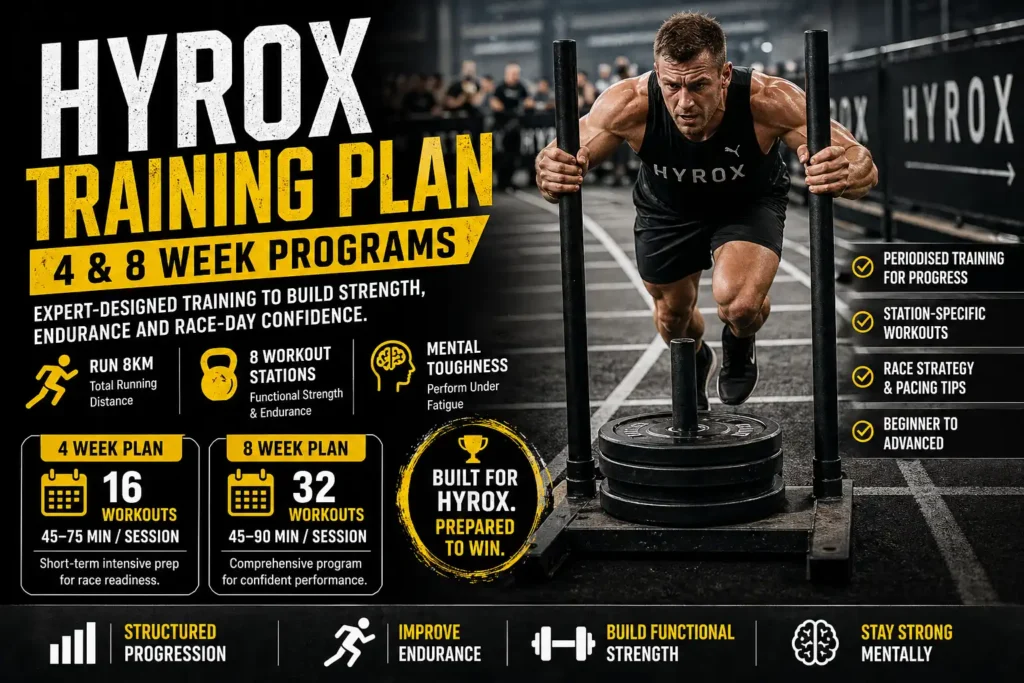
Shoe choice is one of the few race-day variables you fully control in HYROX. Everything else, the sled weight, the station order, the crowd, stays the same for every athlete on the floor. Your footwear does not. Pick the wrong pair and you will feel it in the first sled push, when your foot slides instead of drives. Pick the right pair and you barely think about your feet for the full 8km and eight stations.
This guide breaks down the best HYROX shoes for 2026, what actually matters when choosing one, and how to pick based on your own training background, whether you come from running, CrossFit, or neither.
What Makes a Good HYROX Shoe
A HYROX shoe has to do two very different jobs in the same race. It needs to run 8km comfortably, often on smooth indoor flooring, and it needs to handle eight functional stations that reward grip and stability over pure cushioning. Before comparing specific models, it helps to know what separates a shoe built for this from one that just happens to get worn on race day.
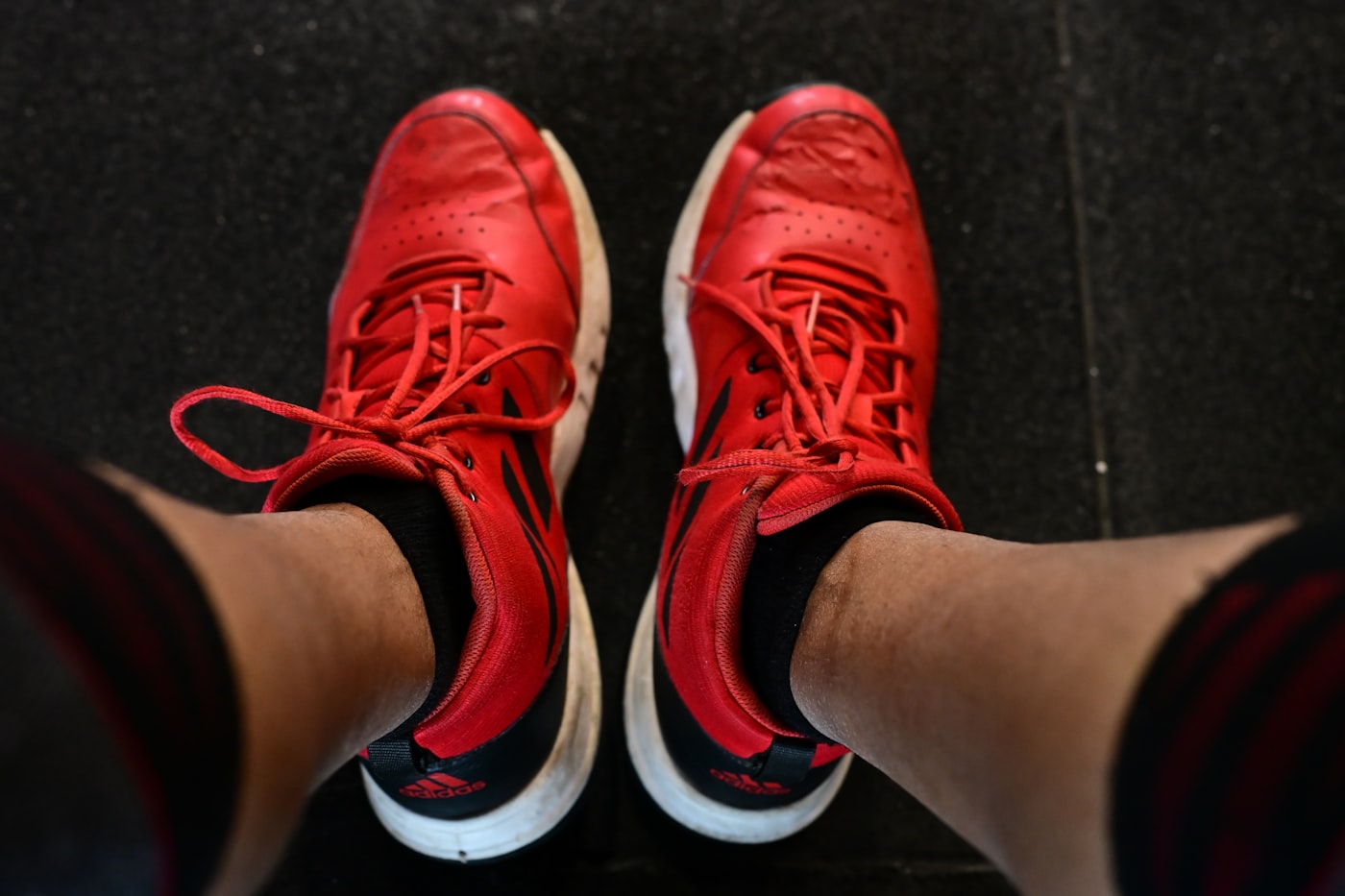
- Grip: Sled push and sled pull are where poor traction costs the most time. A shoe with a full-coverage rubber outsole and a real lug pattern will hold on sweaty or slick surfaces, while a smooth road-racing sole tends to slip under load.
- Stability: Wall balls, sandbag lunges, and burpee broad jumps all load the foot at odd angles. A wide, stable platform protects you here far more than extra cushioning does.
- Weight: Every gram matters over 60 burpee broad jumps and 8km of running. Heavier shoes built for lifting can feel like dead weight by round six or seven.
- Energy return: A responsive midsole, ideally with a plate or foam tuned for propulsion, helps protect your legs on runs five through eight, which is where most athletes lose the most time as fatigue sets in.
- Durability: A shoe that compresses into mush after one hard session will not survive a full training block plus race day.
No shoe maximizes all five. The right pick depends on which trade-off matches your training background and your weakest station.
Best HYROX Shoes for 2026
1. PUMA Deviate NITRO Elite HYROX (Best Overall, Official HYROX Shoe)
PUMA has been HYROX’s official footwear partner since the sport’s first event in Hamburg in 2017, and in February 2026 the brand released the Deviate NITRO Elite HYROX, the first shoe built from the ground up for this specific format rather than adapted from a running or training shoe. It pairs a full-length carbon fiber plate with PUMA’s NITROFOAM Elite cushioning, and the standout feature is a full-coverage outsole with a lug pattern designed specifically to grip HYROX flooring, including sleds and wet, sweat-covered surfaces.
Multiple elite athletes, including HYROX world record holders, have raced in this shoe since launch, and it has already been worn to several world records in 2026. If you want the single closest thing to a shoe engineered specifically for this race, this is it.
Best for: athletes who want a dedicated race-day shoe and are willing to pay a premium for it.
2. Saucony Endorphin Pro 5 (Best for the Running Stages)
The Endorphin Pro line has been a HYROX favorite for several seasons, and the Pro 5 carries that forward. It combines a carbon plate with Saucony’s PWRRUN PB foam, producing a smooth, forward-driving ride that holds up well across all eight runs. Independent lab testing has consistently rated it highly for energy return and impact protection, and it remains stable enough for the strength stations without feeling like a dedicated lifting shoe.
Best for: athletes with a running background who want race-shoe speed without sacrificing too much stability on the stations.
3. Adidas Dropset Elite (Best for Hybrid Athletes)
Adidas built the Dropset Elite specifically with hybrid training in mind rather than running or lifting alone. It uses Lightstrike Pro foam in the heel for cushioning on the runs and a firmer, more stable forefoot for stations like sled push and wall balls. It is one of the few shoes on this list not built primarily around one discipline, which makes it a strong middle-ground pick.
Best for: athletes who split their training evenly between running and functional strength work and do not want to compromise heavily on either.
4. Reebok Nano X5 (Best for a CrossFit Background)
If your training history is mostly CrossFit, the Nano X5 will feel familiar immediately. It is built for lifting and lateral movement, with a flat, stable platform that works well for sled push, and the latest version is noticeably lighter than earlier Nanos, making the running portion far more manageable than it used to be.
Best for: athletes coming from a strength and conditioning background who want one shoe that covers both the gym and the running legs of the race.
5. New Balance 1080v14 (Best for Leg Protection)
The 1080v14 is technically a max-cushion daily trainer rather than a race shoe, but its stability is strong enough to handle the HYROX stations, and it protects the legs across 8km better than almost anything else on this list. It will not be your fastest option for sled push, but for athletes whose limiter is leg fatigue rather than station technique, that trade-off is often worth it.
Best for: athletes who want maximum cushioning and are willing to give up a small amount of stability at the stations.
6. A Reliable Daily Trainer (Best Budget Option for a First Race)
You do not need an expensive race-specific shoe for your first HYROX. A daily trainer you already own and train in regularly is often the smartest choice for a beginner. It will have a full rubber sole with predictable grip, and because you are already used to it, it will feel stable during wall balls and burpee broad jumps. The trade-off is that it will not feel as fast on the runs as a carbon-plated option, but for a first event, familiarity usually beats marginal speed gains.
Best for: first-time HYROX athletes who want to test the format before investing in race-specific footwear.
How to Choose Based on Your Background
| Your Background | What to Prioritize | Strong Options |
|---|---|---|
| Runner | Energy return, cushioning for 8km | Saucony Endorphin Pro 5, New Balance 1080v14 |
| CrossFit / lifting | Stability, flat platform, grip | Reebok Nano X5, Adidas Dropset Elite |
| Hybrid trainer | Balance of both | Adidas Dropset Elite, PUMA Deviate NITRO Elite HYROX |
| First-time racer | Familiarity, reliable grip | Your current daily trainer |
| Competitive / elite | Every marginal gain | PUMA Deviate NITRO Elite HYROX |
Do Women Need Different HYROX Shoes?
Most of the shoes above are released in both men’s and women’s fits, and the underlying technology is the same across genders. The main difference tends to be last shape and available sizing rather than performance features, so the selection logic above applies regardless of which fit you buy. If a specific model runs narrow or wide for your foot shape, that is usually a bigger factor than gender-specific marketing.
Breaking In Your HYROX Shoes
Never race in a brand new pair. Carbon-plated and foam-heavy shoes in particular need at least two to three training sessions, including one that involves sled work, before race day. This lets you confirm the fit under fatigue and gives the foam time to settle into its normal ride, rather than discovering a hot spot or blister mid-race.
Frequently Asked Questions
What is the best overall HYROX shoe for 2026?
The PUMA Deviate NITRO Elite HYROX is the closest thing to a shoe built specifically for the sport, combining a carbon plate, responsive foam, and an outsole designed for HYROX flooring and sled grip.
Can I race HYROX in regular running shoes?
Yes, especially for a first event. A reliable daily trainer with a full rubber outsole will handle the running and most stations fine. You will likely trade some speed and grip on the sleds for the comfort of a familiar shoe.
Do I need different shoes for training and racing?
Not necessarily, but many athletes keep one dedicated pair fresh for race day and train in a separate, more durable pair. This protects the race shoe’s cushioning and outsole grip for when it matters most.
How much do HYROX-specific shoes cost?
Most race-focused options in this guide sit in the 150 to 200 dollar range. Daily trainers and older model years can be found for less, and are a reasonable starting point if you are new to the sport.
What matters more, grip or cushioning?
Grip has the bigger impact on your finishing time. Losing traction on a sled push or pull can cost 30 to 60 seconds per station, while cushioning differences are usually measured in seconds across the whole race.
Final Thoughts
There is no single best HYROX shoe for every athlete. Runners, lifters, and first-timers all have different limiters, and the right shoe should protect against yours specifically. If grip on the sleds is where you lose time, prioritize outsole design over cushioning. If your legs give out on the later runs, prioritize energy return. Whichever direction you go, pair your shoe choice with a structured plan, since footwear only closes part of the gap between a good HYROX time and a great one.
If you are still building out your race-day setup, check the complete HYROX gear checklist for 2026 and the full HYROX training equipment list to make sure shoes are not the only thing you have dialed in. And if you have not locked in a training plan yet, our 12-week HYROX training plan and beginner HYROX training plan are both free to download. For race week, our guide to HYROX recovery covers what to do once you cross the finish line.